Yes, that is what I’m saying.
Thank you.
Maybe someone will try attaching the rotors to the rim. Seems like the next move in larger diameter rotors and they would run cooler I would imagine.
On my car I have floating calipers and floating rotors (2 piece). you replace the outer ring and reuse the hat.
There are several reasons that a two-piece floating disc assembly is of benefit. First, by using an aluminum bell for the hub section of the disc saves a great deal of weight. Since this is both rotating and unsprung, it benefits the acceleration, braking, and handling of the vehicle. Secondly, it is better able to handle the large temperature changes that a brake disc experiences. In a two-piece floating disc assembly, the iron disc heats up uniformly, and the controlled float which is present allows for the differential expansion of the very hot brake disc, and the relatively cool aluminum bell. This allows the disc to be used under severe conditions without having a detrimental effect.

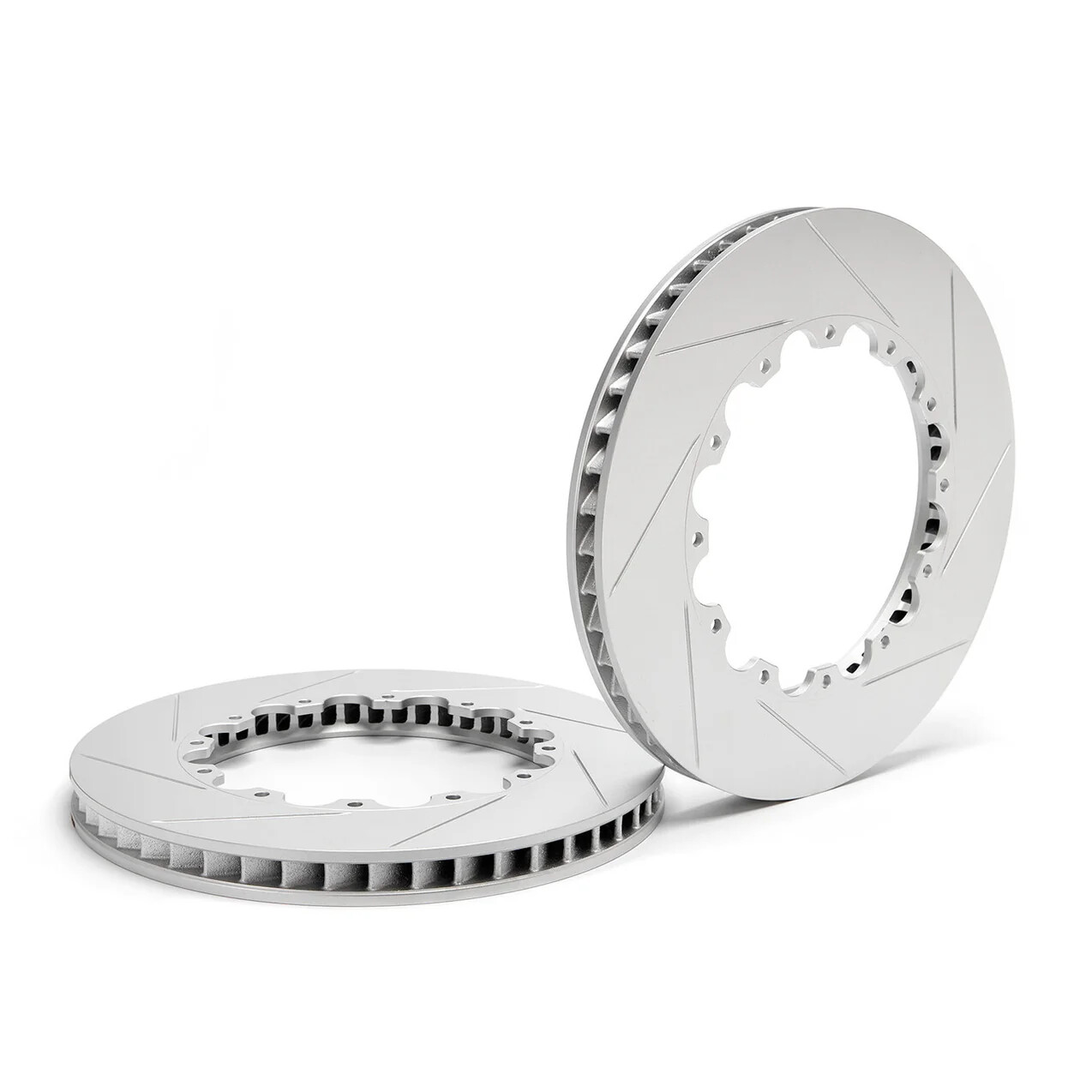
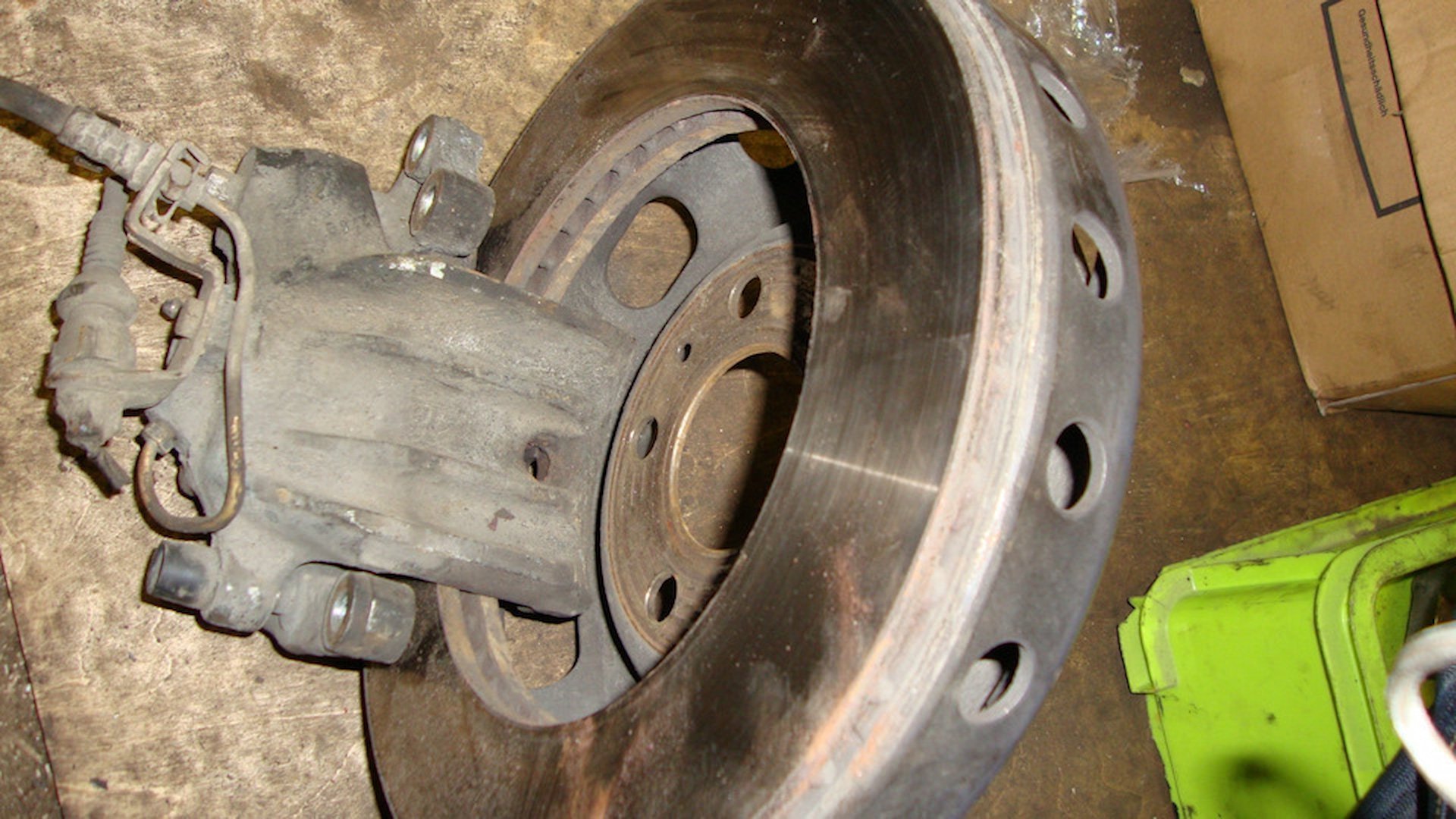
It would be interesting to see what they could have done with the drum brake instead of putting all tgat work into attempting to make a didc brake into a drum brake.
Skinny tires with a nice tall sidewall offer better traction in snow, better ride, less rolling resistance, better looks IMHO and safer handling.
The tires will squeal and give warning before you push it too far vs a low profile.
Ah …… Mmmmm …. Not exactly.
First, you have to compare apples to apples - and when it comes to high profile to low profile tires, the load carrying capacity and inflation pressure has to be the same. So if you do that:
Snow traction: Wider = better, because there will be more of the tread pattern in contact with the snow. HOWEVER, if you mean traction that includes penetrating the snow and getting to the pavement, yes, pavement has much better traction than snow.
Better ride: If we include the stipulation that the sidewalls are comparably designed, then yes, high profile tires ride better than low profile tire.
Rolling Resistance? While it seems counter intuitive, low profile tires are better than high profile tires - all other things being equal. That’s because there is less tread percentagewise in a low profile tire. HOWEVER, it is common for low profile tires to use a tread compound that is grippier, but worse for RR.
Looks? Highly individualistic. I prefer low profile , because I think large amounts of black are less appealing than shiny metal.
Safer handling? I would argue that low profile with their quicker response is inherently safer.
Squealing tires? This is more about the tread pattern that the tire profile - so I disagree.
Warning before breaking loose? If you eliminate the noise, then you are talking about “Feel”. I think they are comparable.
A final thought: The problem here is “ALL OTHER THINGS BEING EQUAL.”. That is not generally how these products are designed, so making these kinds of comparison is fraught with issues.
BTW,. I have a webpage on the subject: Barry’s Tire Tech: Low Profile vs High Profile Tires
Are there scientific data/metrics to back up both of the above?
Because I have believed the opposite, in both cases, for longer than I’ve been on this thing called the internet.
A narrower tire concentrates more of the vehicle weight down through the snow, and, a narrower tire’s contact patch, parallel to the direction of travel, resists rolling the least.
The fact that many road test reviews report lower fuel economy with wider tires contradicts your statement about rolling resistance.
Ohhh geee, if we only had a real life tire engineer on the forum… 
Really Chris, really???
First, the folks in the best position to test these things are the tire manufacturers - and they are incredibly secretive about anything that might give themselves a competitive edge. Further, they aren’t likely to test these things in a rigorous way, unless there is some competitive advantage to conducting such tests.
The second problem is the one I alluded to - that what’s available on the open market aren’t simply differences between high and low aspect ratios. Low aspect ratio tires tend to be designed for high performance cars, so grip, quick response are important, and treadwear, ride quality - not so much.
So are there scientific studies? Sort of, but they haven’t been published - because as I mentioned, this is competitive data.
There have been studies looking at the affect a wider tread has on a tire’s performance - and there is more to it than just snow traction and rolling resistance.
But there is one on the RR issue. I’m referring to a study conducted by Smither’s Scientific Services for the California Energy Commission in 2007. I document it here:
Barry’s Tire Tech: Rolling Resistance and Fuel Economy (Continued)
I’m referring to the size study. I took a deeper dive into it and you can see what I did on that page.
Again, be careful of drawing conclusions based on your experience as tire performance can vary widely. In particular, what you are likely referring to is more the difference between “All Season” and “High Performance”, rather than low vs high profile.
You cut and paste ONE part of paragraph and then did one of your typical snowman arguments. Go back and read the whole paragraph and then apologize.
This is not directed at any one person, just my opinion and experience-
I have never had any car tire penetrate snow down to the bare asphalt while driving. Regardless of width, my observation is that the tire simply compacts the snow under it. Unless of course you are already stuck and spinning the wheel. But I am far less concerned about that scenario than I am traction over snow. So I like wider tires in general over skinny ones…
They did as much as they possibly could with drum brakes. That is why they introduced this disk brake setup. And it wasn’t trying to BE a drum brake it was done because Porsche used a “wide-5” bolt pattern that did not lend itself to a conventional disk brake rotor.
The last F1 championship to use drum brakes was in 1957 when Fangio won it in a Maserati. In 1958 the winning Vanwall used disk brakes as did every winner thereafter.
The higher the snow is off the pavement the loser the snow is. You want your tires to dig down to the pavement or the hard packed snow underneath. We don’t get enough snow in southern NH to really worry about it too much. Live in Central NY (north of Syracuse where I grew up) for one winter and try driving around in wider tires. Here in southern NH we average about 40" a year. Town where I grew up - over 150". Some other towns average over 200". Some towns in the Tug Hill Plateau can average over 300". NO ONE who’s lived in that area for any length of time will agree that wider tires are better. EVERY SINGLE ONE will tell you to get the skinniest tires that are safe for your vehicle.
Hard to argue with the prevailing opinion of people who live in a particular area.
However, dig down enough through deep snow and you start plowing or high center. I’m not concerned about driving through 2’ of snow with a car, I will wait for the plow trucks. Anything less than a foot and I can drive over it if necessary. It doesn’t matter to me if there is 20’ of snow a year. Only how much it snows per storm and how quickly they can get it cleared. I can hunker down during the main storm. BTW- I have driven many times in Yooper Michigan where they get copious amounts of lake effect snow as well. Some big plows going there. But I never needed to dig through the snow to get traction. Good snow tires with aggressive tread and soft rubber compound go a long way.
Around here the last thing I want is to get through the snow layer. Then you just have ice to ride on 
It really all depends on how deep the snow you are trying to drive on is…
If you are driving in 10 feet deep snow, you want a wide tire for better flotation so you don’t sink…
“Arctic vehicles typically run on wide tires, which provide better flotation on soft surfaces like snow and ice, helping to prevent them from sinking. The wider tires also help distribute the vehicle’s weight over a larger area, improving traction in challenging conditions.”
That is 37" tall x 12.5" wide tire on a 17" wheel (37x12.5R17), no pizza cutters there… lol
NH:
I did read the whole thing, and with respect, without being mean about it, what my instincts, and with my experience and the experience of people I’ve talked with in person about it, I feel the opposite of what Capri stated is true, and am actually shocked that they side with wider tires in so many regards.
I’m alone on many of my perspectives, not just tires and automotive (preferences for analog TV, CRTs, Standard time not daylight). I have to be true to my own instincts and true to my heart. No disrespect is meant. It’s how I truly feel, not being a j e r k about it.
And second part of the paragraph
Just a quick comment about winter tires… great traction. Wide or narrow, beats all season tires hands down.
Winter tires with studs….freakin awesome. 3 weeks in Sweden winter testing proven how incredible studded winters are. One point… You never see the pavement in winter because the roads never clear. It is too cold for salt or sprays so you are always driving on the snow pack.