I decided to replace my cabin air filter today, so I went to Wally World, and I bought a Fram filter–which was the only brand that they stocked.
When comparing the new Fram to the “old” OEM filter, I was surprised to find that the Fram was MUCH less substantial than the OEM filter. Next year, when it’s time to replace the filter again, I’ll probably go to Auto Zone, open some boxes, and compare the various brands that they sell. If they’re all as flimsy as the Fram filter, then I’ll just buy a replacement from the dealer’s parts counter.
Then again, given the bad financial situation of Fram’s parent company, that brand might not even be around next year.
d a Chrysler minivan with the 3.3 engine. It was very noisy with the Fram filter. Noise went away with a Motorcraft filter. I got a tip from a Chrysler minivan forum that the Motorcaft worked even better for this than even the Mopar filter.I h
I’ve had at least 2 vehicles that I used Fram filters exclusively for well over 300k miles with zero issues. for the past 10+ years I’ve been using Wix because I can buy them in bulk. Never had a problem with them either.
I can’t speak for todays Fram filters. But 15 years ago when I used them exclusively they were always knocked, but they were a decent filter.
Those were probably engine air filters and/or oil filters. They might still be decent quality, but–trust me–the current Fram cabin air filters are so flimsy that I would never buy one again.
Not to start anything, but try to buy a Honda or even AC filter at AZ, Oreilly, etc. you have to go to a dealer. I can buy any quantity on line from dealers instead of franchise parts stores. Prices are about 50% what you would pay over the dealer parts counter. I just keep a set of filters on the shelf so I have them when I want them, then re-order again. Yeah I’ve seen all the filter evaluations, etc. and just buy oem. I’m not an engineer so not interested in metal components, filter media, etc.
Sorry Nevada, but I do the same thing for small engine parts and keep belts and critical parts on hand for when needed. Driveway blocked is no time to try and get out and find a belt somewhere. But yeah I change parts in anticipation too.
Sometimes if I change cars I’ll get stuck with obsolete parts but so what? I just toss them or peddle them to anyone that can use them.
I ONLY use Motorcraft on my Mopar fun car, FL1A and have also used FL300 (short filter) a time or 2…
Now I will only be buying for my Toyota’s (from a dealer only, Amazon and eBay has too many knock offs) oil filters and most other parts as well, from one of the Toyota dealers that basically wholesale them (online only), I (you) can buy OEM canister type oil filters for $4.28 normally which is about 27% off MSRP, but if you catch the Black Friday online sale, you get an additional 25% off for $3.21 each… The prices shown are the already normally discounted prices and then if you do the math you get the 25% off also, I think this was a MSRP price of a little over $169.00 before the double discounting… Yes that is 6 quarts of 0W20 full synthetic oil for $34.86, I got it for $26.14 or $4.36 a quart… Next BF sale I will buy a years worth of stuff… lol
BTW, The oil filter (Not FRAM) for my Vibe/Matrix cost me $9.99 for a Carquest Premium (cheapest at the time), no more, going dealer all the way…
Free shipping on $75.00^ orders, so you do have to plan ahead… lol
I recently bought a 3 pack of OEM filters for the 2025 RAV4 hybrid from Amazon. Genuine OEM Toyota filters with the drain plug gaskets for $25. The generic knock offs were $20 so no incentive to take that risk.
First car I had where the drain plug and filter have clear drain paths so nothing gets in the way of the draining oil. What a treat that was!
Yes, the car came with 2 year maintenance coverage included but that’s a few tire rotations and oil changes. I’ll gladly pay the money for the oil and filters and do the changes myself. Nobody touches my cars unless it is a warranty repair…
The manufacture for my car wants me to use Pennzoil Ultra Platinum Full Synthetic 0W-40 Motor Oil. It uses 7 quarts. and they are usually $14.00 a quart. When they go on sale, I can get them for about half the cost. I usually will buy 3-4 cases.
You do realize that Fram was a privately-held company, before being swallowed up by First Brands, and that quality often suffers when a company is merged into a larger company???
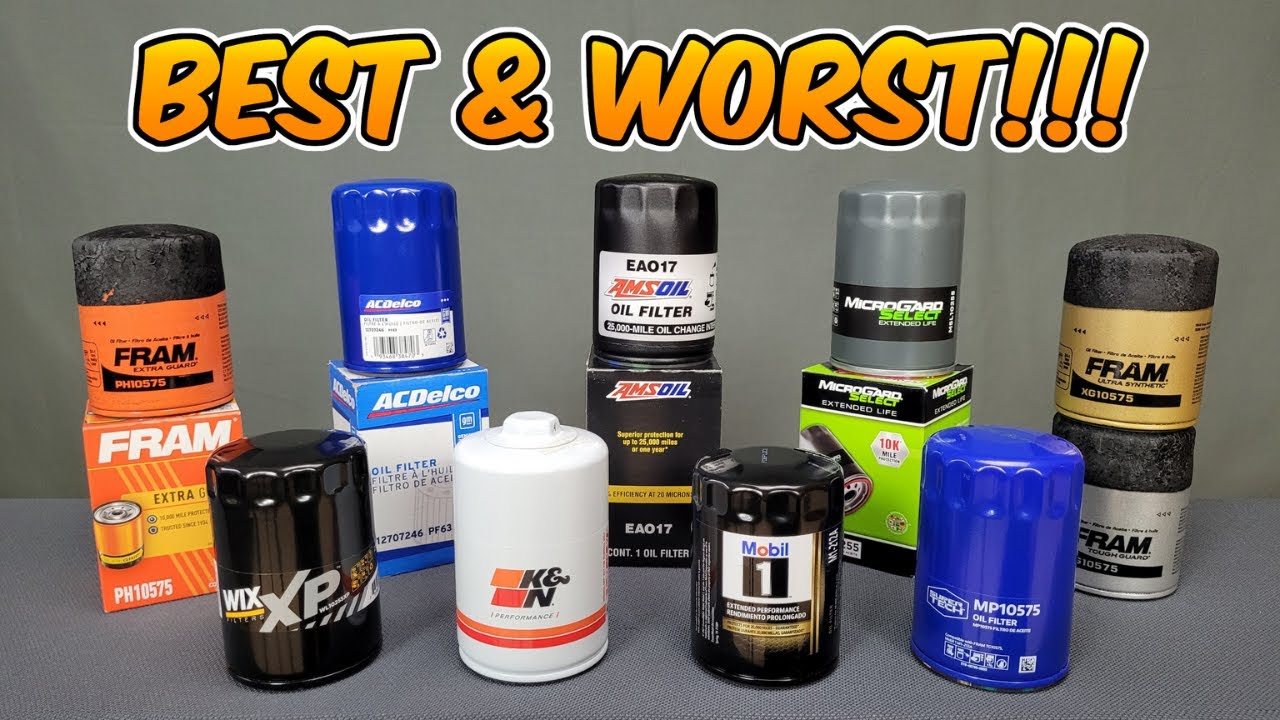
I remember cutting open oil filters back in the early 90’s to check visually the quality/quantity of the material, mainly in length, and FRAM was always the worst, had this discussion with my then business partner later on and he cut some open and was surprised at how bad FRAM was compared… Now this was the basic filter (I don’t remember seeing different levels (good, better, best?) of filters like FRAM has now) and they were all junk… I have seen much more current test on filters and the basic still is junk, even finding rust inside the unopened basic FRAMs… Now a days, FRAM has the better/best filters and those do test OK, but the basics not so much…
I wouldn’t worry about the quality of Fram filters because they may not be on store shelves too much longer.
First Brands financed their growth through “less restrictive” Private Lending, instead of regulated Bank Lending and amid various allegations the debt is going for as little as 30 cents on the dollar.
What does cutting open a Filter prove? Did you examine the flow rate of the filter material? How about the how find of partials it’s filtering? I’ve seen real world tests of the Fram filter where the test the oil flow rate, the dirt in oil before and after usage and the amount and size of filtered material. It was as good or better than most of the filter companies.
Through the 80’s and into this century, Fram filters was the number 1 selling oil filter in the world. I’ve never ever seen or even heard of an engine failure due to using a Fram filter.
I’m not saying Fram is the best filter, nor that other filter companies don’t make better filters. They probably do. But that doesn’t mean that Fram filters are junk. They do their job and have done it for almost 100 years.
I have seen problems with other filter companies like Purolator. One was for my wife’s 1987 Honda Accord. I couldn’t find a Fram filter so I bought a Purolator. After changing the filter - the Accord was leaking like a sieve. Most engines the filter’s gasket will fit on a flat surface. The Accord engine - the gasket fits into a groove the exact size of the filter gasket. But the Purolator filter gasket didn’t fit. The Purolator filter gasket was about 3 thousand of an inch too big. This particular filter by Purolator also fit a Mazda engine. Fram made a different filter for each of those engines. Purolator made the mistake of thinking the one that fit the Mazda was close enough to fit the Honda engine. Purolator was not the only manufacturer to make that assumption.
The other problem I had with Purolator was with my 1984 GMC pickup. One day I went to buy a Fram filter and noticed the filter # had changed, but the Purolator number was the same old one. After some digging I found out that GM had changed their filter spec for the 2.8l engine. Fram kept up with the new spec and made the change. Purolator didn’t. GM made another change 2 years later and again Fram changed their filter accordingly. Purolator was still using the original filter spec. The new filters by AC/Delco and Fram were significantly larger than the original filter and the one still made by Purolator and other filter manufacturers like STP.
As I had said, it was a visual inspection… But you can tell a lot about some things when you cut them open and look inside…
MY personal cutting open and looking inside was back in the 90’s…
The anti drain back valves (FRAM added/upgraded theirs in 2018) amount of filter element was about 2/3rd (less pleats, clogs faster then is by passed) of every other filter out there at the time, found rust inside of multiple FRAMS, no other brand including the better/best FRAMS had rust in them…
I have seen flow and other test also…
Here is one visual inspection of some filters out there, I have not found the video that showed the rust inside yet…
(I’m not buying and cutting a bunch open now a days), but I do always cut open my fun car oil filters just to look for any of the bad stuff… lol
Yes, FRAM has name recognition, but marketing is the reason for that… And back in the day they were almost always the cheapest on the market…
As far as I am concerned FRAM air filters are as good as the next guys, and the better/ best oil filters seem good…
And no, I have never seen an engine directly failed due to an oil filter (other than a flat out failure), but I have also never seen a controlled long term test for wear and tear on engines using different oil filters…
The issue I’m trying to point out is visual inspecting may not mean a ■■■■ thing.
Here’s a real world example (not related to cars, but it’s a general assessment of engineering principles and testing).
Company I use to work for had a telecom piece of equipment mainly used as pass through buffer. We had a 2 terra bit transfer rate with less then 100 bits dropped (lost). Our competitor also had a 2 terra bit transfer rate, but well over 1000 bits dropped (lost). Ours had 10 times less dropped rate. This was for voice communication. And the difference in drop rate made ZERO MEASURABLE DIFFERENCE in sound quality. We were better on paper, but in real world testing it made ZERO DIFFERENCE. Ours cost at least 30% more than out competitors. Both had the same shelf life. One is showing a perceived difference based on specs. But real world testing proved there wasn’t a difference.
I currently use Wix filters because I can buy them in bulk. If you open both filters up and compare the Wix will seem like a much better filter. But in real world testing, Wix didn’t do any better than Fram, or the margain was so close it didn’t make a difference.