

Letsuck apparently goes out of their way to make it difficult to change the transmission fluid in their RX350h “lifetime” sealed transmissions.
Transmission fluid filter? Laughable.
The man exposes a good point.
Just stop. It is time for you to buy a vehicle that you can use the actual name it has.
I’ve seen stay dirty guy. Is video saying no one can add fresh fluid to trans? How do manufacturers do it in factory? I don’t think any manufacturers have figured out how to stop you from removing/replacing trans cooler lines from radiator. If you want to add/remove fluid you can use lines.
Yes, using a fill port is easier. Do they have non removable trans pans also?
When the name applies, I apply it.
They also turn off their somewhat useless GPS after 3 years.
Heading west from one hospital to another, their GPS instructed turning north from the arterial I was on to a much busier arterial with many traffic signals 9 blocks north.
Then after about a mile, head south back to the original arterial.
Hospital OR personnel were so glad that I did not follow their GPS instructions.
I will come back to dipstickless (“sealed”) transmissions/transaxles in a later post…
1st thing, your RX350H is a hybrid with a hybrid transaxle (E-CVT), something you seam to not fully understand, so the same servicing of a multi geared or CVT transaxle/transmission does not apply… They have their own servicing…
Now WATCH these videos before making anymore post about your hybrid transmission/transaxle please…
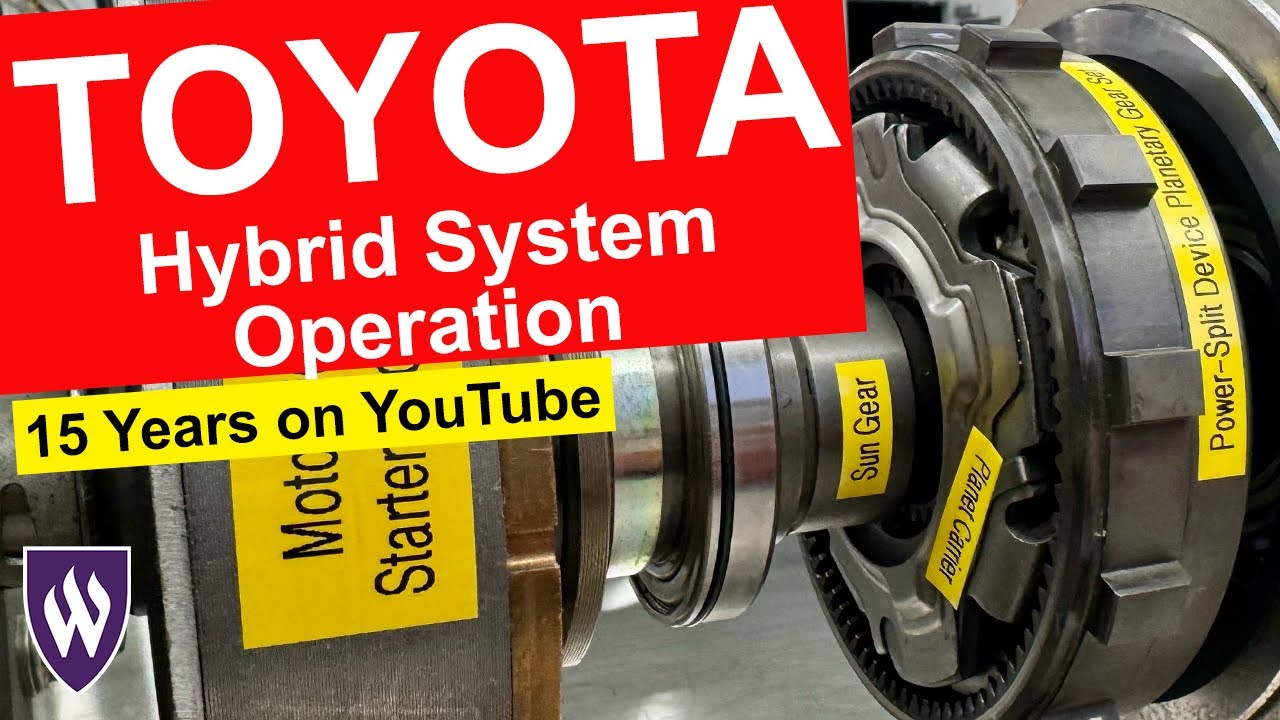
A very deep dive into an RAV4 ECVT transaxle… basically the same, the RX350H is more powerful, but same basic trans…

And a real world teardown of a Toyota E-CVT

Thank you. Saw that years ago.
RX350hybrid still needs to have fluid changed.
Need not make it so difficult.
Since I must change the engine oil so often, does anyone make a spigot to screw into the
oil pan drain plug opening?
After a long distance bloodelivery, I changed the hot oil in the parking lot of a Walmart near the hospital. Parked straddling a gutter, bought oil and filter and dumped the used oil in their oil recycle bin.
Denver , Colorado is centrally located so driving back home from where ever you where is not going to put your vehicle past the oil change mileage to make any difference at all .
Also as long as you have been doing this delivery thing you probably don’t even need to consult GPS.
Why not use a vacuum pump to change the oil?
Since I had not been home in two days I was well beyond the change interval.
The GPS is needed for unusual routes from one hospital to another.
For familiar routes I still use it in case there is a problem such as crash which occured before I was able to cause it.
State patrol was going to have me continue on an Interstate highway closed due to a fatal crash.
But then advised getting off because there was so much debris everywhere.
Yesterday the cell phone GPS enabled me to give hospital personnel a good “No later than” ETA.
I tell them the ETA down to the second!
Wish I had one to suck the oil and any debris from the oil pan.
Having OCD (Oil Compulsive Disorder) I.nsert a piece of paper towel to wick the last drops of oil from the oil pan overnight. Amazing how much drips out from the end of the paper.
In case of another O-dark-thirty call, the oil filter is already lubed and installed, oil plug new gasket oiled, dipstick cleaned, oil and 5-quart container opened ready to pour in. Must be careful to FIRST screw-in the drain plug while talking to police dispatch.
Why are you guys even interacting with him . . . ?!
He clearly has no intention of ever changing
He’s repeatedly shown us who he is
Nothing better to do? Goodaugh?
There is no such thing as a “sealed” transmission. My 2002 Daewoo Lanos had no dipstick, but it had a fill cap to add fluid, and two plugs on the side of the transmission which you remove to get the fluid level correct. My 2004 Toyota Corolla has a dipstick, with a label on it that says “no need to change the transmission fluid”. I have changed the fluid and filter twice now, in about 134,000 miles. My 2004 Dodge Neon and 2000 Chev Silverado both have a dipstick and the recommended maintenance includes changing the transmission fluid.
Part 2… This is very long but with a lot of good info…
Disclaimer: The terms transmission, transaxle, and trans are used interchangeably here and refer to multi-speed automatic transmissions & CVT’s to a point…
First, there is really no such thing as a truly “sealed” transmission… What most people call sealed transmissions are simply dipstickless transmissions… Likewise, there is no such thing as “lifetime fluid”… There is only fluid that is expected to last for the anticipated service life of the transmission, which manufacturers generally consider to be around 150,000 miles… Many transmissions can and do last much longer than that…
Dipstickless transmissions have been around for over 30 years, so they are nothing new… As a former transmission builder who still dabbles in the trade, I understand why manufacturers and many builders prefer them…
When serviced correctly, a dipstickless transmission is filled to the exact fluid level the engineers intended… A traditional dipstick-equipped transmission can easily be overfilled or underfilled, both of which can cause problems… Eliminating the dipstick also reduces the chances of someone introducing the wrong fluid into the transmission…
I know most people dislike dipstickless transmissions, but in many ways they are a better design because the average vehicle owner simply doesn’t know much about vehicle maintenance… I’ve seen people put engine oil in the brake master cylinder, use the wrong engine oil, add the wrong ATF to a transmission, and overfill or underfill components… I’ve seen some things that would make you wonder how the vehicle survived at all…
Most people also don’t realize that many automatic transmissions require the engine to be running to properly check the fluid level… Some older designs, such as certain Hondas, have different procedures, but many modern automatics do not…
As someone who has professionally built transmissions, I’d rather the average customer not be able to tamper with the transmission while it’s under warranty, and I’m sure the manufactures are the same way…
Transmission fluid expands significantly with temperature, which is why many modern transmissions must be checked within a specific temperature range…
Is it a bit of a pain? Absolutely. Is it a better and safer way to ensure the correct fluid level? In my opinion, yes…
Manufacturers have also extended service intervals over the years while maintaining reliability… We used to service transmissions every 30,000 miles or less, later, some moved to 50,000-mile intervals, and then came the unrealistic “lifetime fluid” marketing… Even experienced master technicians, such as the Toyota/Lexus specialist commonly known as the Car Care Nut, recommend servicing Toyota’s ATF WS transmissions approximately every 60,000 miles rather than following the lifetime-fluid philosophy…
Much of this is possible because modern ATFs are better formulated, friction materials have improved, and transmission temperature management is far more controlled… Today’s transmissions warm up faster and maintain operating temperature more effectively than older designs…
On modern transmissions, there is nothing wrong with performing a pan drop and filter replacement, if it has one… However, on Toyota’s dipstickless transmissions using ATF WS and others, regular drain-and-fill services are generally sufficient and are recommended for a reason… If the transmission has a serviceable filter and removable pan, then perhaps every 100,000 to 120,000 miles a pan drop and filter service makes sense, or anytime the pan gasket needs replacement because of a leak… After all, a transmission pan is simply another potential leak point…
Generally speaking, on modern transmissions, being off by even a few ounces can matter, as a few ounces may already place the fluid level outside the engineers intended specification, and being off by half a quart or more should be corrected as soon as possible…
Some owners have reported improved shift quality after correcting fluid level, even when only a small amount of fluid was added or removed… Low fluid levels can lead to delayed engagement, slipping, or erratic shifting because of reduced hydraulic pressure, overfilling can cause the fluid to aerate or foam, which also reduces effective hydraulic pressure and can result in similar symptoms, increased heat, and possible seal damage…
These late-model transmissions rely on very precise hydraulic pressure and fluid control for proper operation… Just because a transmission seems to work fine today doesn’t mean there won’t be long-term consequences… Operating with an incorrect fluid level can accelerate wear and shorten transmission life over time…
Universal ATF is spec’d for a multitude of transmissions, and just because it has all the manufactures recommended additives in it for your transmission, doesn’t mean those other universal additives for other manufactures are compatible with the clutch fibers and solenoids and what nots of your trans… ATF is very critical in these modern transmissions and so that means that the other manufactures additives may not be correct for it… One of the reasons for premature transmission failure is using the wrong ATF (that includes universal ATF)…
Even the car care nut says that using universal ATF has damaged Toyota transmissions…
If you actually read the manual, you’d see that if you drive anything but what Toyota considers normal driving then the tranny fluid should be changed every 50-60 thousand miles. But you’re a self-proclaimed expert on vehicles so you should already know this.
First change was 60+k. Later changes 90k.
Toyota ATF World Standard from Walmart.
No reason to make it so difficult for us who care but do not have the facilities and equipment.
Since 1995 I have encountered what was considered permanent fluid. My trusted trans shop said no such thing. With a dipstick I always had trouble with the proper level. Now with no dipstick, the dealer or trans shop takes care of it. Car level, fluid at temp, fill plug underneath, etc. I let the shop do it every 30k, and include the dif and transfer case on the awd. Nothing hard but not a diy job anymore. Not the only service item I ignore the marketing folks on.